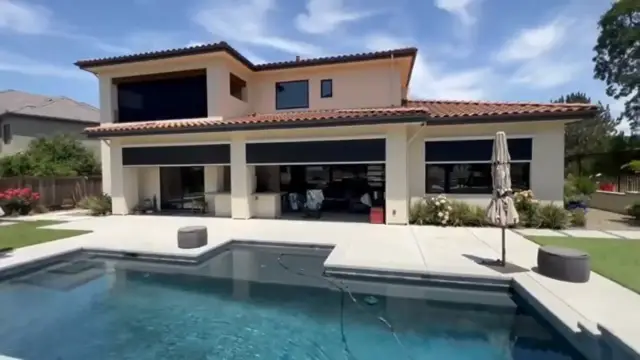
People tend to think of these as patio bug screens and that's where most of them end up, but the applications have evolved a lot over the past decade. The fabric you choose changes what the screen actually does, so the same system can serve completely different purposes depending on the mesh.
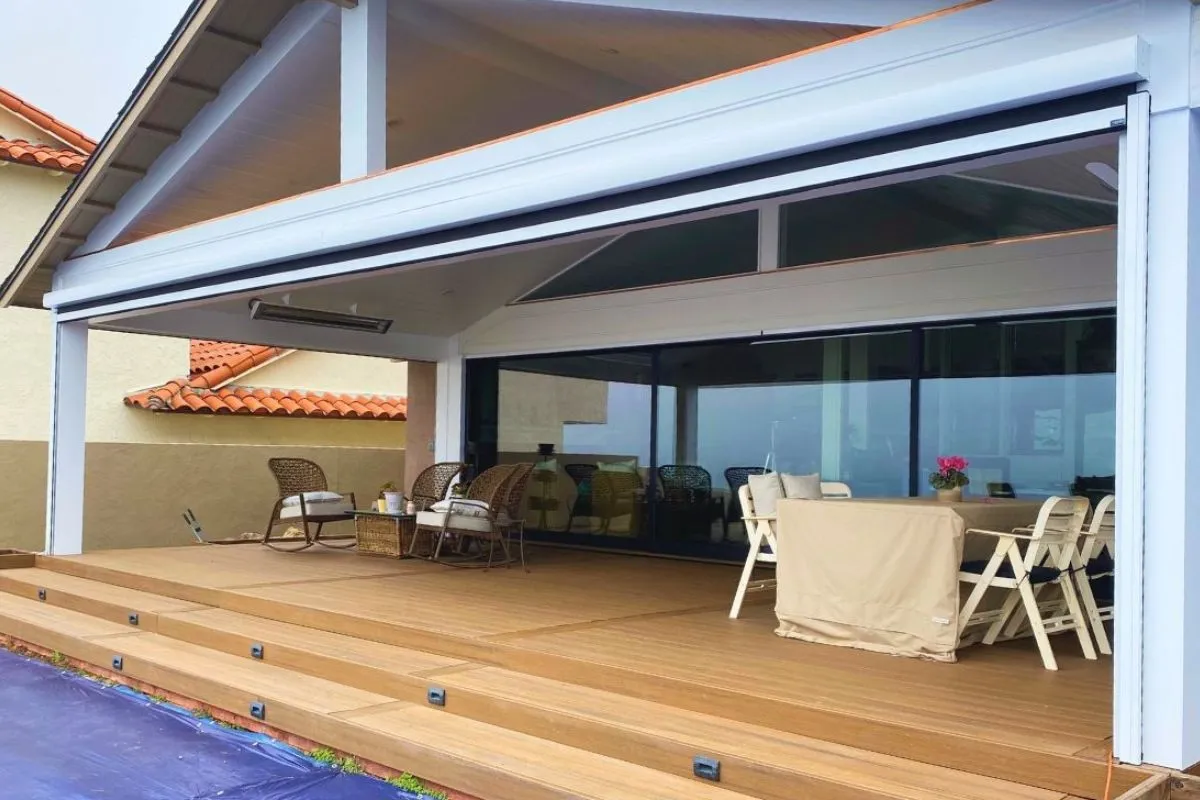
This is our bread and butter. You've got a covered patio or porch, sometimes what's called a three seasons room and you want to use it year-round without the bugs, the wind, or the neighbor staring at you while you eat dinner. Motorized patio screens seal the space in — completely — and give you back the room. In the winter you're trapping heat. In the summer you're cutting UV and keeping things comfortable. We've enclosed everything from a 4-foot kitchen window to a 35-foot covered patio with the same system.
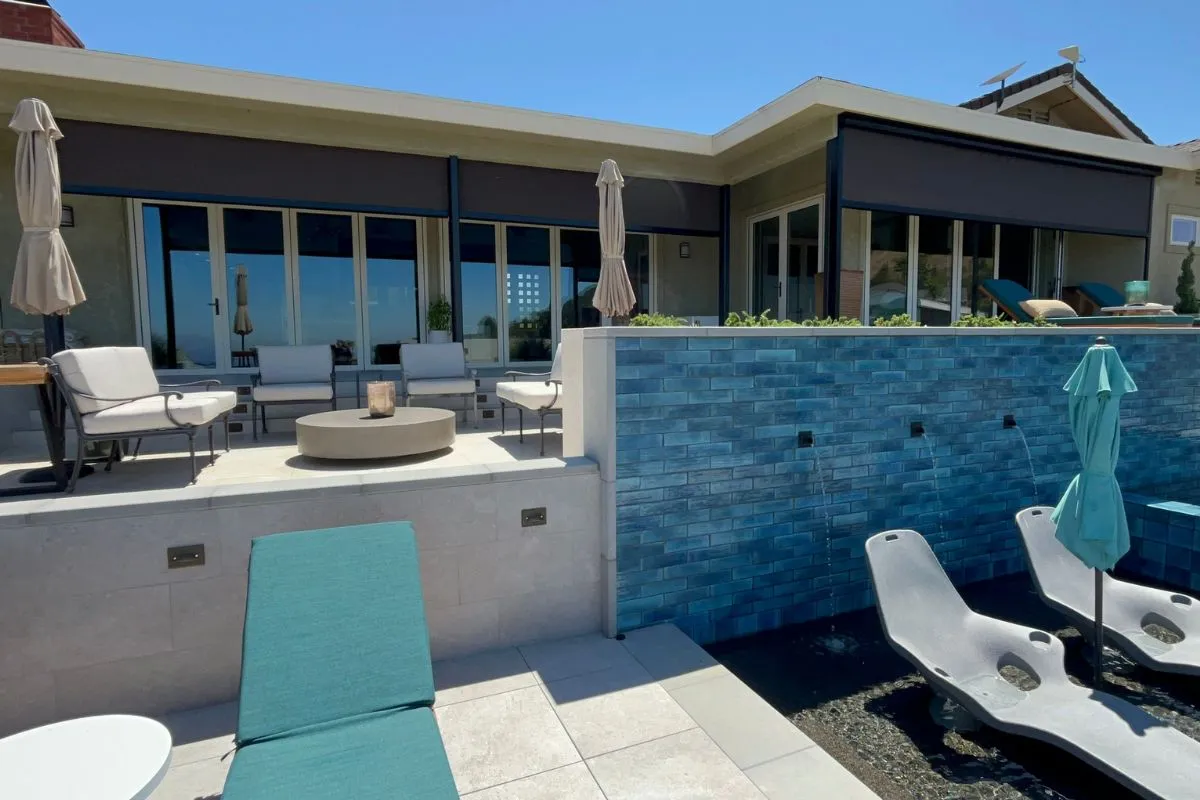
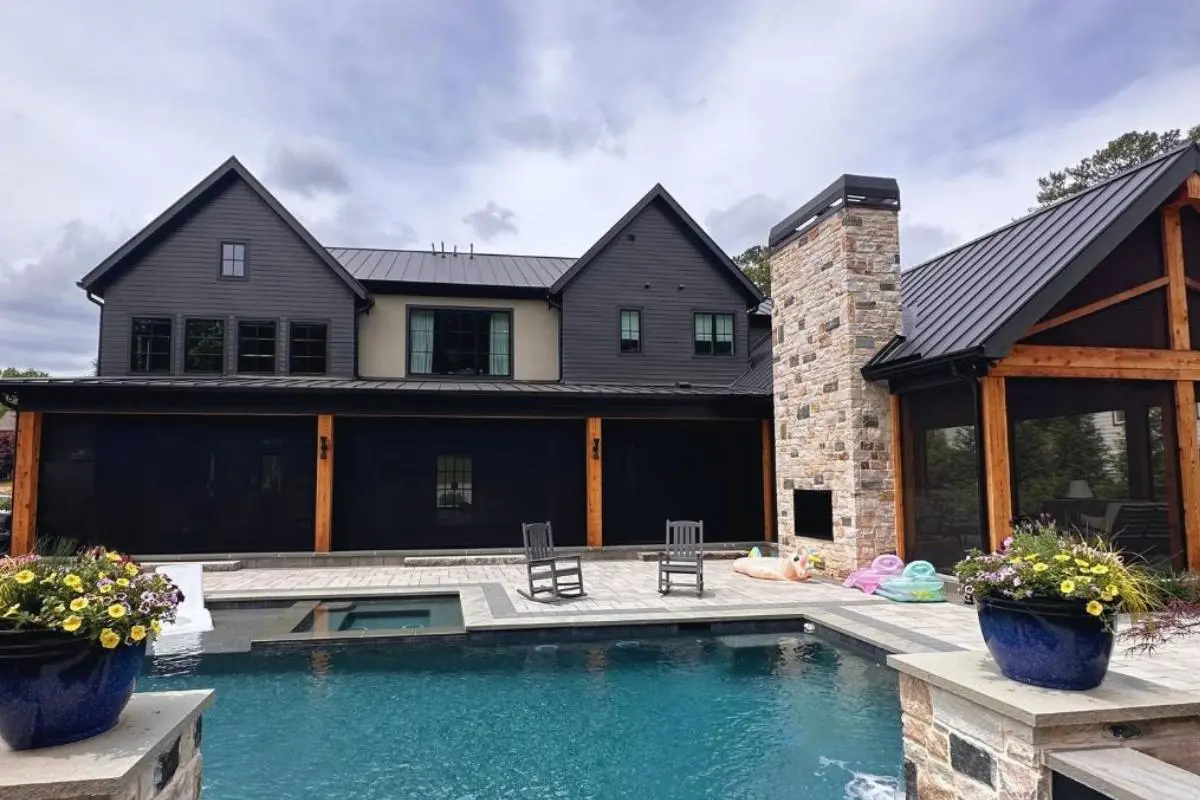
Screening in your porch used to mean fixed screens and a swinging screen door. That works, but you're staring at screen mesh every time you look outside. With retractable screens you get the bug protection when you want it and a completely open porch when you don't. We've written about how to close in a porch in detail — the short answer is retractable screens add roughly 100 days and nights of usable porch time per year. We like to say they're there when you need them, out of sight when you don't!"
This one's been growing fast. A motorized garage screen turns a two-car garage into a home gym, office, workshop, or just a place to sit with a beer and a breeze without the mosquitoes. Way more practical than people expect. We built a dedicated page for motorized garage screens if that's what brought you here.
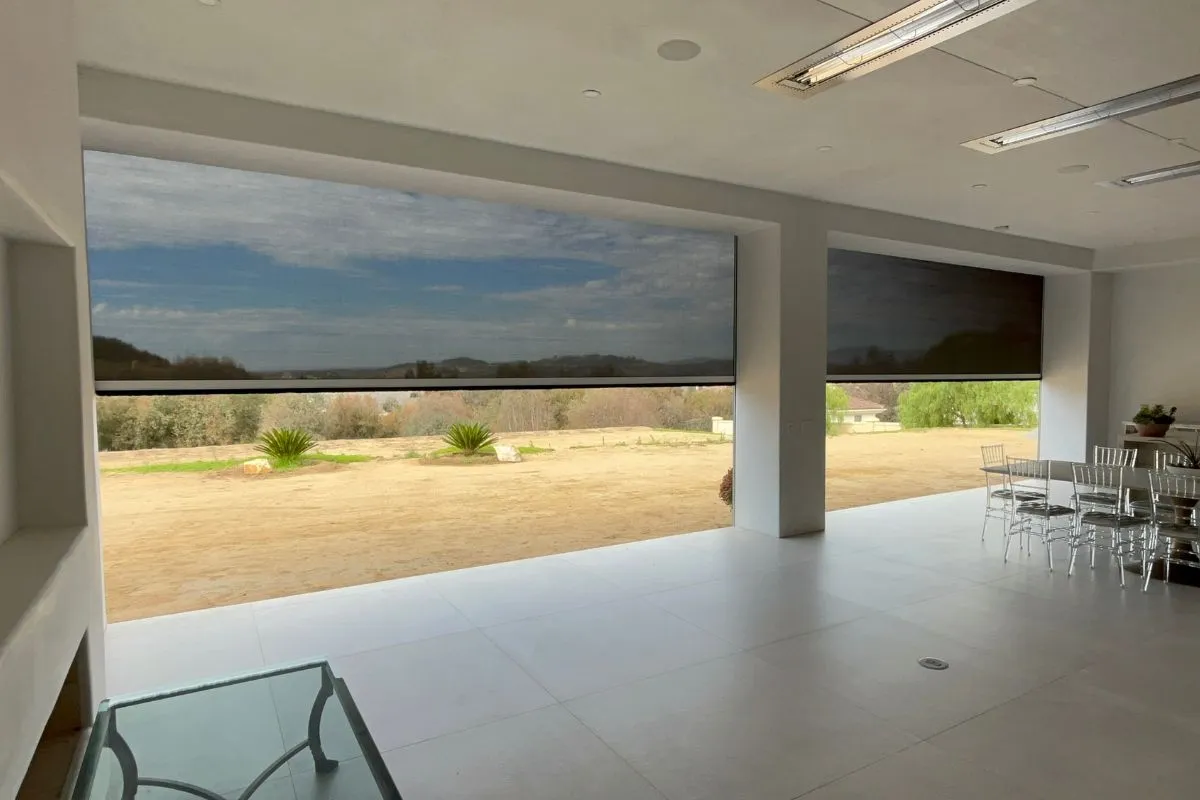
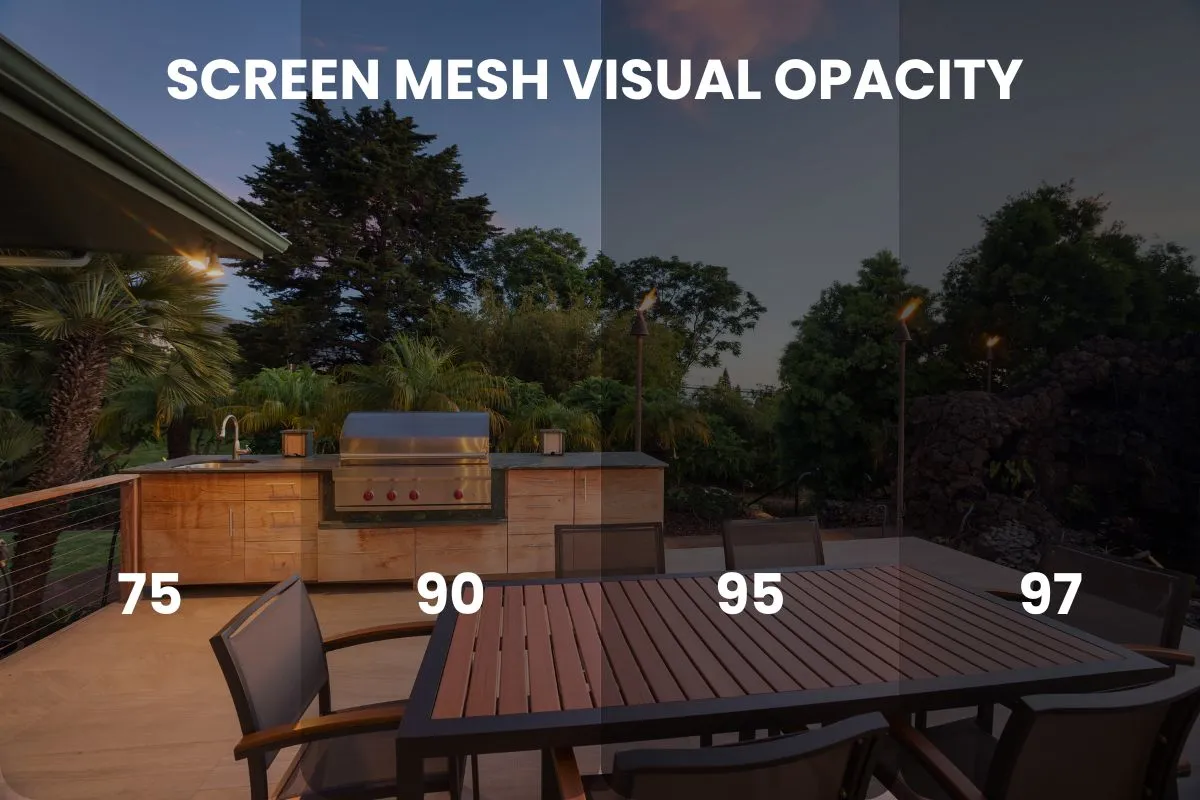
Same motorized system, different fabric. Instead of a bug mesh you're getting a solar shade that blocks heat and UV — anywhere from 75% to 97% opacity depending on the fabric. Your house faces west and the afternoon sun is brutal? This is the fix. We cover shades in detail on our motorized outdoor shades page.
Solar mesh gives you one-way daytime privacy — you see out, nobody sees in. If you want full privacy day and night, a fabric from a privacy fabric that is made for outdoor use, a polyester yarn coated with PVC, blocks 99% of visibility. Tucked away when you don't need it, and honestly not bad looking when it's deployed either.
We'll say it upfront: we manufacture these. So yes, we think ours are the best. But we've been at this for over two decades and we've seen every competitor's product get installed, break down, get warrantied, and in a lot of cases get ripped out and replaced with ours. We know what fails on other brands because we used to install them before we started building our own.
Here's what we did differently and why it matters.
Most motorized screen housings are chunky. They stick out, they look industrial, they're not something you want hanging off the front of a nicely finished patio. Our 4.5-inch "Tiffany Cut" hood is the smallest in the industry. It holds the same motor, the same fabric, covers the same spans — up to 30 feet — but doesn't look like a piece of HVAC equipment bolted to your house. This matters more than people think. You're spending real money on a motorized screen. It should look like it belongs there.
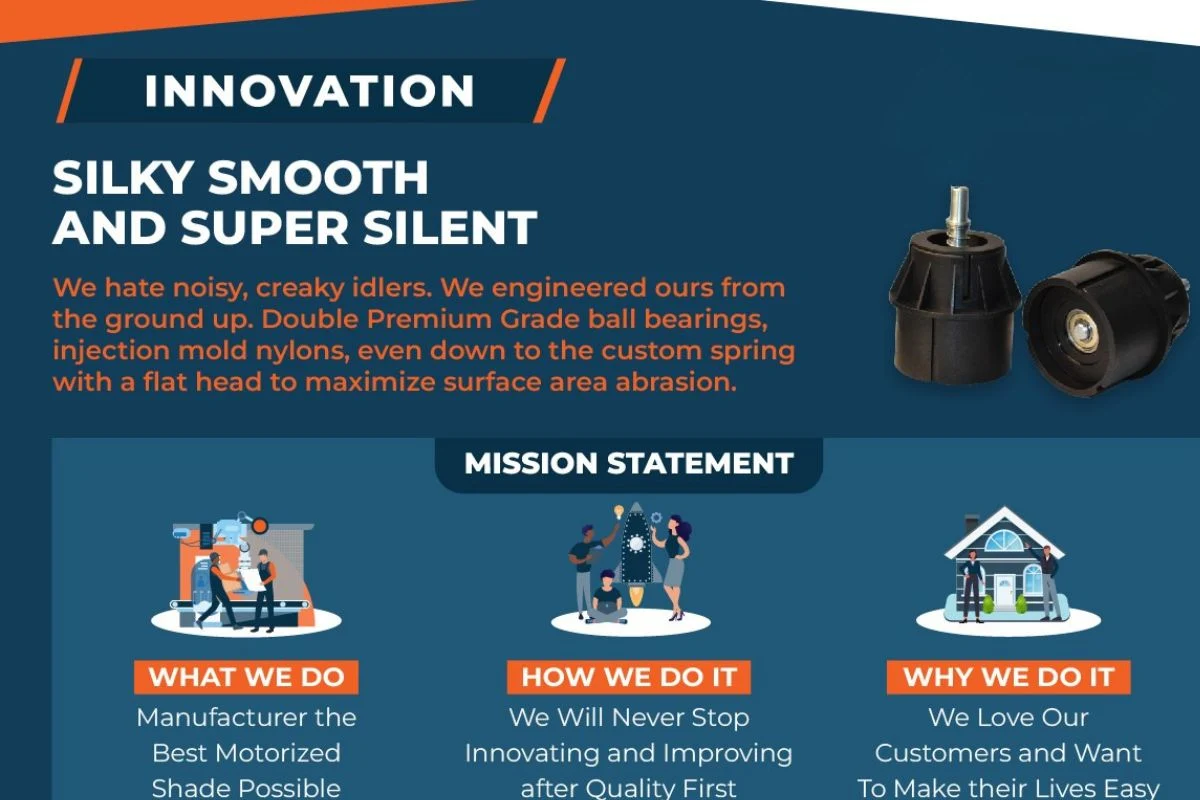
Here's a thing that drives us crazy. Some of the biggest brands in the business use off the shelf parts, regular plastic pieces, and idlers not engineered for outdoor use. On a product that sits outside in the sun, the rain, and temperature swings from 20 to 120 degrees depending on where you live. Plastic gets brittle. Plastic cracks. Plastic is cheap, which is exactly why they use it. We use injection mold, glass filled D66 nylon for our "plastic" components. This is a fancy way of saying our nylon parts are UV stable, incredibly strong, and won't crack or fade. Our idler- the part that moves with the fabric - uses 2 ball bearings. Not one, two. The result is a screen that operates so smooth and so quiet you almost can't hear it. The industry standard is a creaky, noisy plastic idler. We hate creaky, noisy plastic idlers.
This one's technical but it matters. The zipper that runs along the sides of the fabric — the part that locks into the side tracks and keeps bugs out — has to be permanently attached to the mesh. A lot of manufacturers sew it on or use adhesive. We impulse weld it. The laser targeted heat strip fuses the materials at a molecular level. It's not coming apart. Period. We run the largest impulse welder we've ever seen — 30 feet long — to make this happen.
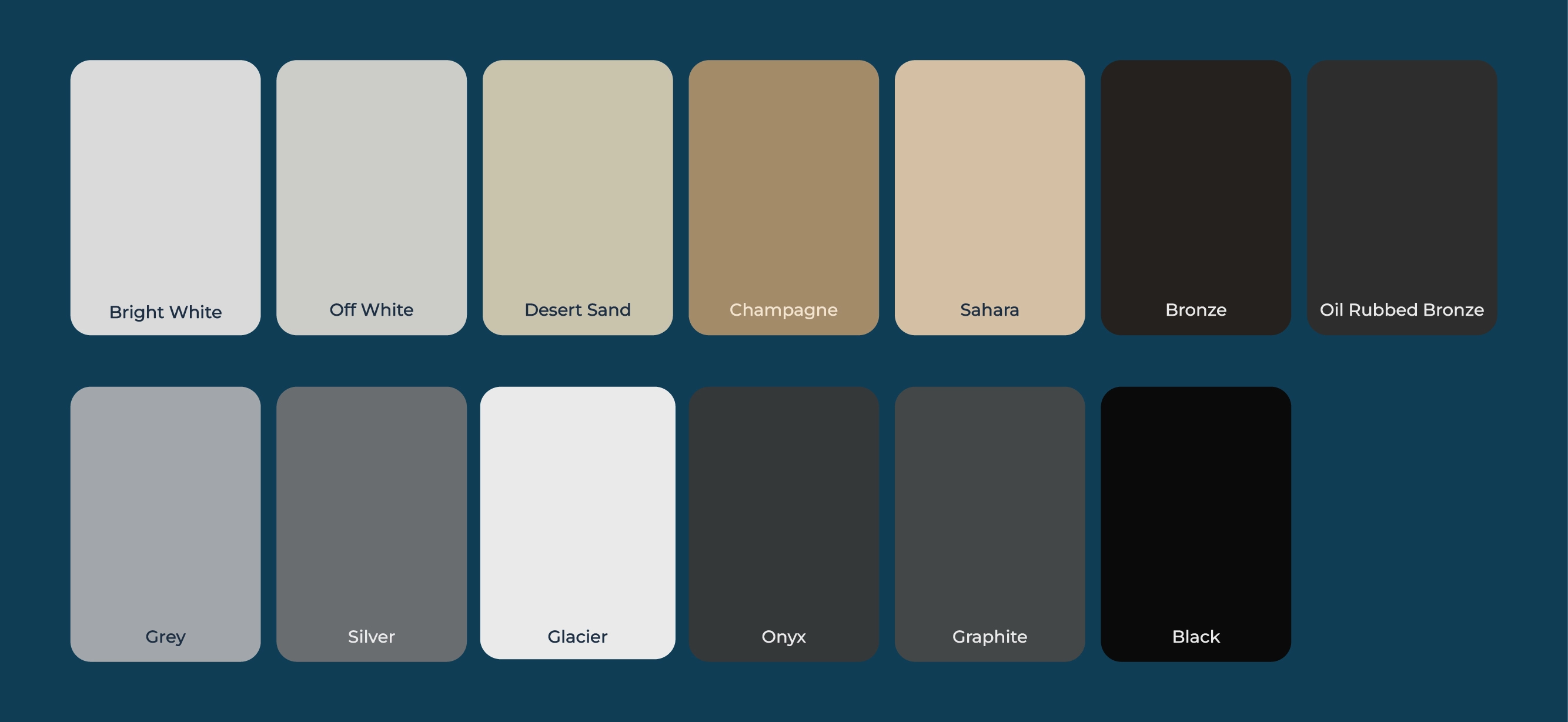
Every Apollo screen is individually powder coated. Here's the detail that matters: we cut the aluminum first, then paint it. Most manufacturers do it the other way around — paint the extrusion, then cut it to size. That leaves raw, unpainted edges that will peel and corrode over time. It's faster and cheaper to do it their way. It's better to do it ours. We do our own powder coating in-house specifically so we can control the quality. Not some robot or conveyor that can't detect minor imperfections — actual people, painting by hand, checking every unit. 13 standard colors, unlimited custom options. Whatever your house needs, we match it.
Our frames are extruded from 6063 T6 high-grade aluminum. This is the same grade used in architectural applications — it's strong, it's lightweight, and it doesn't corrode. We use thicker, stronger aluminum than anyone else in the space. Over time that's the difference between a screen that holds up for 20 years and one that warps, flexes, or sags.
This is important, so if you've been skimming, slow down for this part.
The fabric is arguably the most important decision you'll make, and it's where a lot of people — and a lot of installers — get it wrong. There is a massive difference between interior shade fabric and exterior screen fabric. Interior fabrics have a fiberglass core. Exterior fabrics are made from PVC-coated polyester. An interior fabric installed outside will fall apart. It's not a matter of if, it's when.
Here's the tell: an interior solar material that blocks 95% of UV is labeled as a "5% fabric." The same blockage on an exterior fabric is labeled as "95%." If someone quotes you a "5% openness" for an exterior application, they're either using the wrong fabric or they don't know the difference. Either way, walk.
Apollo uses exclusively exterior-grade fabrics from Twitchell and other outdoor-specific manufacturers:
Insect Mesh — Standard bug screen. Available in black or white. Lets the breeze through, keeps everything else out. 20-year warranty.
Solar Mesh (75-97% Openness) — A 97 fabric blocks 97% of UV and lots of heat. You can still see through it — barely — and from the outside during the day you're essentially invisible. A 75% fabric is much more transparent, blocks less heat, but still cuts glare and filters the breeze. A Solar 95 is probably our most popular option — great balance of shade, visibility, and privacy.
Privacy Fabric — Blocks 99% of light. Full privacy on both sides, day and night.
Clear Vinyl — Traps heat in the winter and gives you a windbreak without losing any visibility.
Every fabric we use comes with a 20-year warranty — Designed specifically for outdoor exposure.
| Fabric | UV / Heat Block | Bugs | Privacy | Warranty |
|---|---|---|---|---|
| Insect Mesh | Low | ✓ | — | 20 years |
| Solar 75% | 75% | ✓ | — | 20 years |
| Solar 80% | 80% | ✓ | — | 20 years |
| Solar 90% | 90% | ✓ | Daytime | 20 years |
| Solar 95% | 95% | ✓ | Daytime | 20 years |
| Solar 97% | 97% | ✓ | Daytime | 20 years |
| Privacy | 99% | ✓ | Full (day + night) | 20 years |
| Clear Vinyl | — | ✓ | — | 20 years |
| Max Span: | Up to 30 feet (same housing) |
|---|---|
| Hood/Housing: | 4.5" Tiffany Cut — industry smallest |
| Frame Material: | 6063 T6 extruded aluminum |
| Track Options: | Recessed (2.60" x 1.5") or surface mount (2.25" x 1") |
| Fabric Retention: | Impulse-welded zipper system |
| Motor: | Tubular, obstacle detection, remote + smart home |
| Standard Colors: | 13+ (custom unlimited) |
| Fabric Options: | Insect, solar (75%–97%), privacy, clear vinyl |
| Fabric Warranty: | Up to 20 years |
| Motor Warranty: | Up to 20 years |
| Manufacturing: | Hand-built in the USA |
| Installation: | Professional, factory-trained technicians |
After two decades in this business — yes. A quality motorized screen adds usable square footage to your home, extends your outdoor season by months, and in many markets increases home value. The customers who tell us they wish they'd done it sooner outnumber the ones with regrets by about a thousand to one.
Same motorized system, different fabric. A screen uses an insect mesh that lets air through and keeps bugs out. A shade uses a solar fabric that blocks heat and UV. Some fabrics do both — a tight-weave solar mesh blocks bugs and sun while still letting a breeze through.
Our zipper track system locks the fabric in place from top to bottom. In moderate wind the screen stays put. In serious wind — sustained 40+ mph — retract the screen. The obstacle detection motor makes this easy and the system handles retraction smoothly.
Usually yes. Motorized screens are hardwired to your home's electrical system — 110V, 2.5 amps. Your Apollo dealer will advise on what's needed during the consultation. In most cases it's a straightforward connection to an existing circuit.
A single unit typically takes half a day. Multiple units on the same job can often be completed in one to two days. Your dealer will give you a specific timeline during the consultation.
Yes. Apollo PowerScreens integrate with smart home systems and can be operated via remote, wall switch, phone app, or voice through Alexa, Google, and other platforms.
Very little. An occasional wipe-down of the tracks and housing, and maybe a rinse of the fabric if it gets dusty. These are built to live outside and engineered to not need constant attention. The 20-year fabric warranty and 20-year motor warranty reflect how long these things actually last.

We Believe in Highly Trained and Skilled Local Technicians to Sell, Service & Install Our Products