
You've got a patio you love and barely use. Maybe it's the mosquitoes that show up at 6pm like they have reservations. Maybe it's the sun that turns your outdoor furniture into a griddle by noon. Maybe it's the neighbor who makes eye contact every single time you try to eat dinner outside.
Whatever the reason, you're googling “screened-in patio” because you want a solution. And you're probably imagining a contractor showing up, building a big aluminum frame around your patio, stapling screen mesh to it, and handing you a bill for $20,000. That's one way to do it.
It's not the only way.
We've been installing patio screens for over two decades — fixed enclosures, retractable screens, manual screens, motorized systems. We manufacture motorized retractable patio screens, so yes, we have a bias. We'll be upfront about that the entire way through this. But we've also ripped out more fixed enclosures than we can count and replaced them with retractable systems, so we have a pretty clear picture of when each option actually makes sense.
Before you call a contractor or start browsing Amazon, here's the landscape. There are really three approaches to a screened-in patio, and they're not interchangeable. Each solves a different version of the problem.
Fixed screen enclosures are the traditional route. Aluminum or wood frame, permanently installed, screen mesh stapled or splined in. This is what most people picture when they think “screened patio.” It works. It's also permanent, expensive, and in a lot of jurisdictions requires a building permit. We'll get to that.
DIY screen kits are the budget play. Companies like Screen Tight sell track-and-spline systems you can install on an existing covered patio over a weekend. Cost is usually under $1,500 in materials for a standard patio. The catch is you're getting what you pay for — light-gauge materials, no motorization, and fabric that will need replacing in 3–5 years if it's in direct sun.
Retractable patio screens — both manual and motorized — are the third option and the one most people don't know exists until they start researching. These mount to your existing patio structure, deploy when you want protection, and disappear into a housing when you don't. No permanent frame. No always-there mesh blocking your view. If you want the full rundown on brands, we wrote a comparison of the best motorized retractable patio screens that covers the major manufacturers.
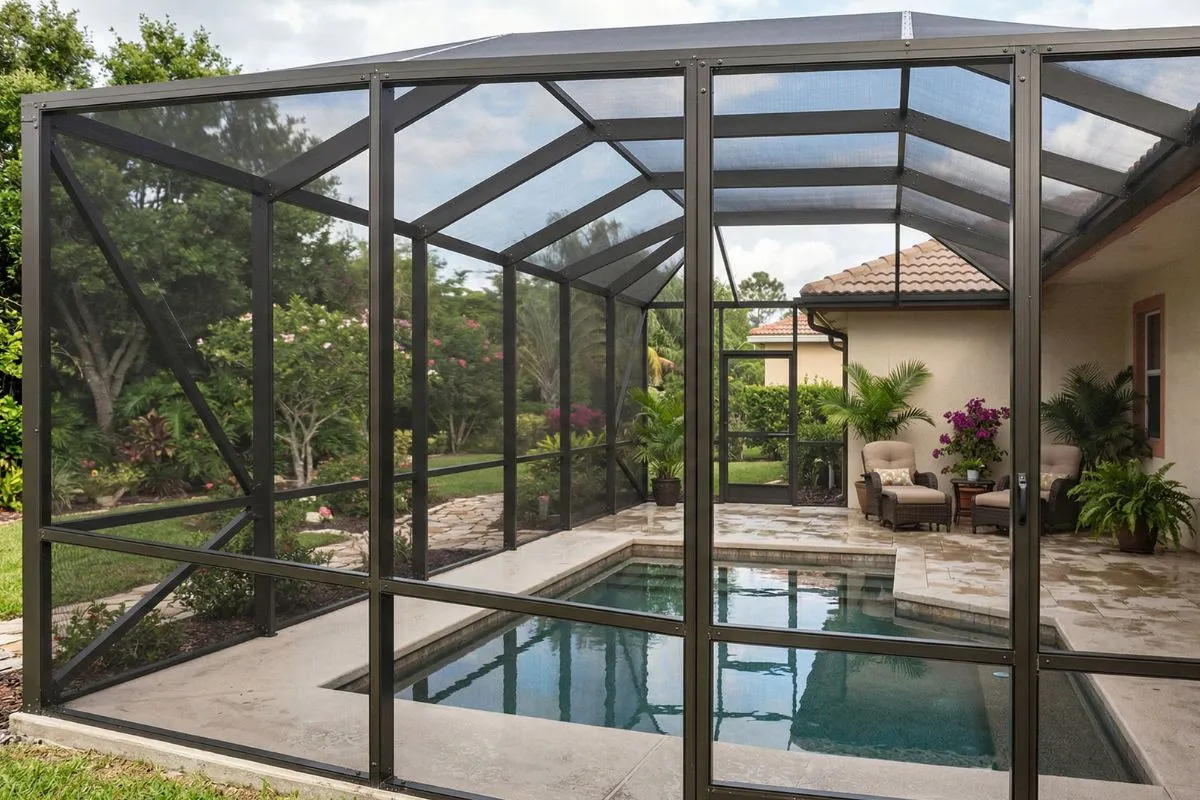
We're not going to trash fixed enclosures. They exist for a reason and for some situations they're the right call.
If you live in Florida or the Gulf Coast and your patio faces a swamp, a retention pond, or any body of standing water — you probably want a screened-in patio that's sealed 24/7. A fixed enclosure with a screen door gives you that. It's always on, always protecting, no buttons to push. Mosquitoes in central Florida aren't a sometimes problem. They're an every-single-evening problem. A permanent bug barrier makes sense there.
Fixed enclosures also make sense if you're building from scratch and want to incorporate the screen room into the architecture of the house from day one. Some builders integrate screen rooms into the floor plan. Concrete slab, proper roof tie-in, the works. That's a different project than retrofitting an existing patio.
The downsides are real though. A professionally built screen enclosure for a standard patio runs $15,000 to $40,000 depending on size, materials, and your market. You're looking at permits in most municipalities. And once it's built, it's there. You are now staring through screen mesh every time you look at your backyard — even on a perfect 72-degree evening when the bugs aren't out and you just want to see the sky.
That last part is what drives people to us. We've had hundreds of customers tell us the same thing: “I love the bug protection but I hate that I can't see my yard without looking through a screen.” We've written a full guide on how to close in a porch that walks through all the options if that's the direction you're leaning.
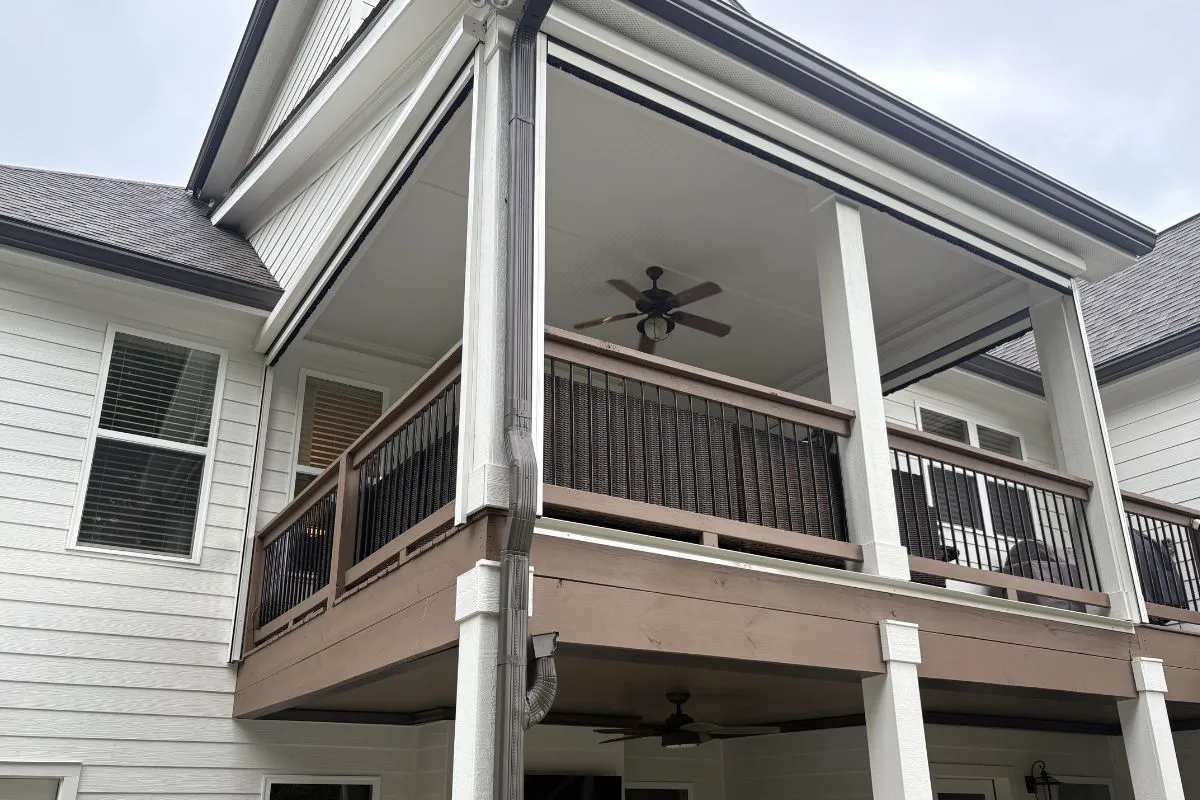
Here's where our bias kicks in and we're not going to pretend otherwise.
A retractable screen porch gives you the protection of an enclosure with none of the permanence. Screens down when the bugs come out. Screens up when you want an open patio. The system retracts into a housing that's about 4.5 inches on our units — smaller than a rain gutter. Most people's guests don't even notice it's there until they see the screens deploy.
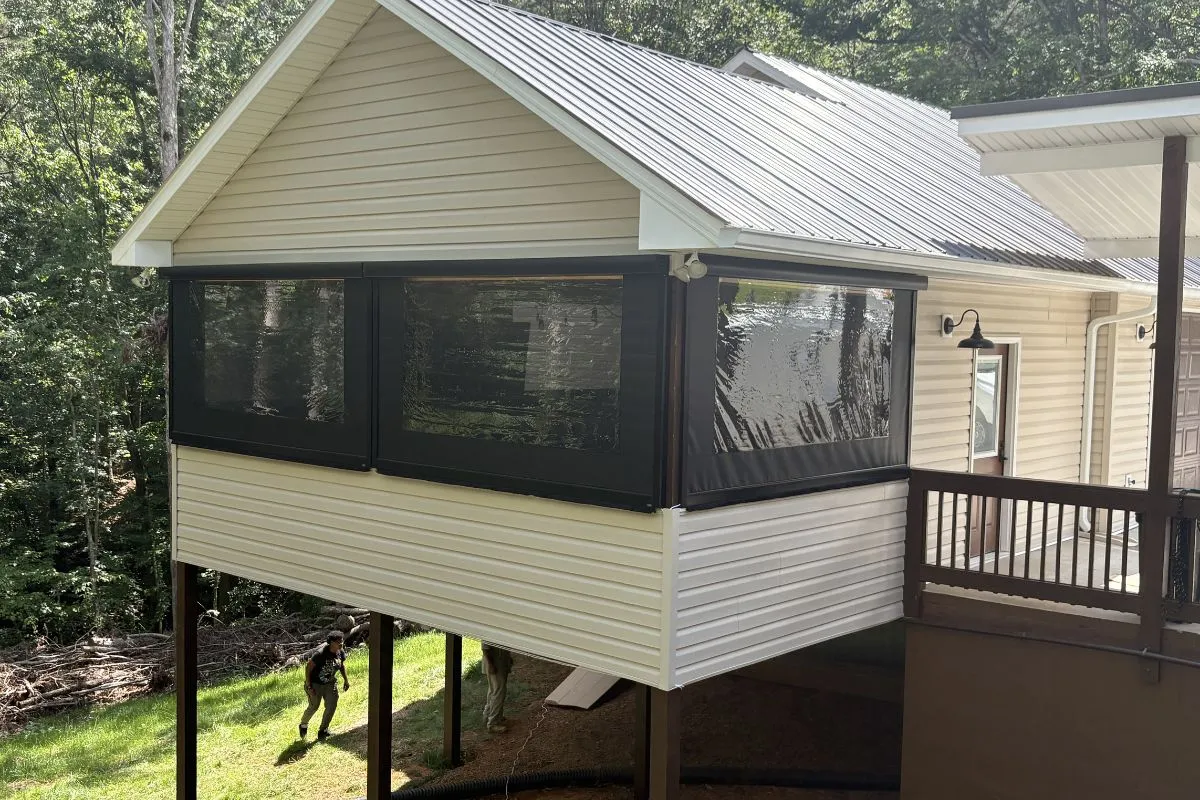
The practical differences from a fixed enclosure:
No permanent frame. You're not building a structure. Retractable motorized patio screens mount to your existing patio cover, pergola, or overhang. If you have a covered patio already, installation is usually half a day.
No permits in most cases. This is huge. Because you're not building an enclosed structure, most jurisdictions don't require a permit for retractable screen installation. Always check your local codes, but we've done 50,000+ installs and permit issues are extremely rare with retractable systems.
HOA friendly. Fixed enclosures change the exterior appearance of your home permanently. That's an HOA review in almost every neighborhood that has one. Retractable screens that retract out of sight? Most HOAs don't even classify them as a modification. When they're up, your house looks exactly the same as every other house on the street.
You pick what you're screening for. This is the one that surprises people. With retractable systems you're not limited to bug mesh. Want shade from the afternoon sun? There's a solar fabric for that — blocks 80%, 90%, even 97% of UV depending on what you choose. Want privacy from the neighbors? One-way solar mesh lets you see out while they can't see in. Want a bug seal? Insect mesh with a zip track system that locks the fabric edges into the channels so nothing gets through. You can even mix fabrics on different openings — bug mesh on the side facing the yard, solar shade on the side facing west.
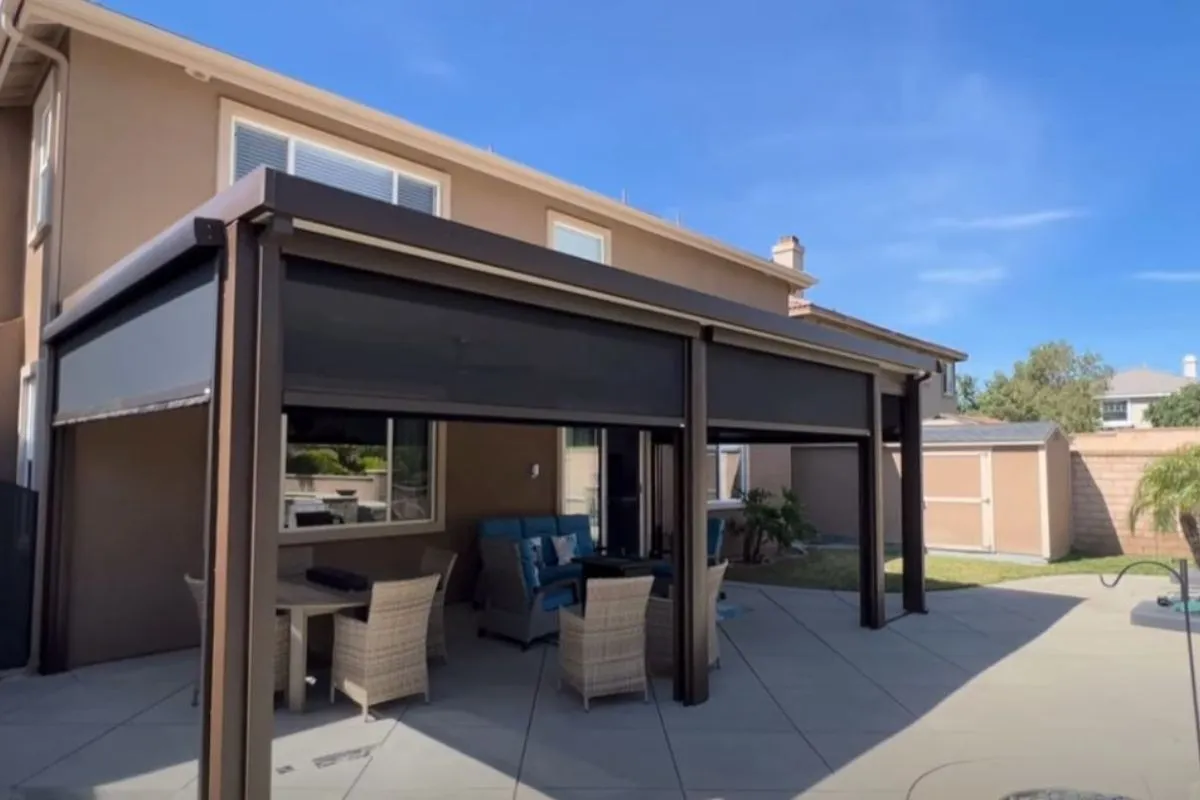
Let's be honest. At least half the people reading this article are here because of mosquitoes. So let's talk about that directly.
A fixed screen enclosure with proper bug mesh and a screen door gives you a permanently sealed space. As long as the door closes properly and nobody's kicked a hole in the screen, you're bug-free. Simple.
Can a retractable screen match that? With a zip track system — yes. The fabric edges lock into channels that run the full height of the opening. When the screen is deployed and the bottom bar seats into its channel, the space is sealed. We're not talking about a curtain blowing in the wind with gaps on the sides. It's a sealed enclosure that happens to disappear when you don't need it.
Without zip track? No. A free-hanging roller shade will not keep bugs out. The wind catches it, there are gaps at the edges, and mosquitoes are small and motivated. If bugs are your primary concern, make sure whatever system you're looking at has a sealed track system. Ask the specific question. A lot of companies sell roller shades and call them “patio screens” without explaining that there's no bug seal.
People want numbers, so here are numbers. These are ranges based on what we've seen across thousands of installations nationwide. Your market will vary.
| Fixed Enclosure | Retractable Screens | |
| Installed cost | $15,000–$40,000+ | $3,000–$6,000/opening |
| Permit required? | Almost always yes | Rarely |
| Install time | 1–3 weeks | Half day to 2 days |
| HOA approval | Usually needed | Usually not needed |
| View when not in use | Always screened | Fully open, unobstructed |
| Bug protection | 24/7 passive | On-demand (zip track = sealed) |
| Fabric warranty | Varies — often 1–5 yr | Up to 20 years (Apollo) |
| Motor warranty | N/A | Up to 20 years (Apollo) |
For a standard three-opening patio — let's say two sides and a front, each about 12–15 feet wide — you're looking at roughly $9,000 to $18,000 for motorized retractable screens installed. A fixed screen enclosure for the same space is likely $20,000 to $35,000 with permits and construction.
We have a detailed breakdown of how much motorized screens cost if you want to dig into the variables — size, fabric choice, number of openings, local labor rates.
This deserves its own section because it catches people off guard constantly.
A fixed screen enclosure is a structure. In most US cities and counties, adding a structure to your property requires a building permit. That means plans, inspections, setback calculations, and in some cases an engineer's stamp. We've seen permit costs alone run $500 to $2,000 before a single piece of aluminum gets installed. Timeline? Some municipalities are backed up 4–8 weeks just for review.
HOAs are the other landmine. Most HOAs require architectural review for any exterior modification. A screen enclosure changes the visible profile of your home. That's a review, a committee meeting, and often a 30–60 day wait for approval. Some HOAs deny them outright because they don't match the “community aesthetic.”
Retractable screens generally sidestep both problems. You're not building a structure. You're installing an appliance on your existing covered patio. In most jurisdictions that's treated the same as installing an awning or a ceiling fan — no permit required. And HOAs that would reject a screen enclosure often don't even require review for retractable screens because when they're retracted, the house looks unchanged.
We always tell customers: check first. Don't take our word for it, and don't take your neighbor's word for it. Call your local building department and your HOA before you commit to anything. But in our experience across 50,000+ installations, permit issues with retractable screens are extremely rare.
.webp)
We'll give it to you straight. If any of these describe your situation, a fixed enclosure might be the better fit:
For most other situations — you already have a covered patio, you want flexibility, you don't want to deal with permits, your HOA is picky, or you just don't want to stare through screen mesh on a beautiful evening — retractable screens are the move. They're faster to install, less expensive, they don't alter your home's exterior, and the technology has gotten to the point where the bug protection is functionally identical to a fixed enclosure if you go with a zip track system.
We obviously think our system is the best option. We built it that way on purpose after 20+ years of installing everyone else's products and knowing exactly what fails and why. But whatever you choose, make sure you're comparing apples to apples. Ask about the track system. Ask about the fabric warranty. Ask if the housing is powder-coated or just painted. Ask how wide a single unit can span without a center post. These details matter more than the brand name on the box.
If you want to explore the retractable screen route, get a free estimate from your local Apollo dealer. The consultation is free, they'll measure everything, and they'll give you real numbers for your specific patio. No pressure, no surprises.
A fixed screen enclosure typically costs $15,000 to $40,000+ depending on size, materials, and local labor. Motorized retractable patio screens run $3,000 to $6,000 per opening, installed. For a standard three-opening patio, retractable screens cost roughly $9,000 to $18,000 total — significantly less than a permanent enclosure and with no permit required in most jurisdictions.
For a fixed screen enclosure — almost always yes. It's classified as a structure in most municipalities, requiring plans, inspections, and often an engineer's stamp. Retractable patio screens typically do not require permits because they mount to your existing covered patio without adding a new structure. Always check your local building department before starting any project.
Yes — if the system uses a zip track or sealed channel. Zip track retractable screens lock the fabric edges into channels that run the full height of the opening, creating a sealed barrier when deployed. Free-hanging roller shades without sealed tracks will not keep bugs out. Always ask about the track system before buying.
A traditional screened-in patio uses a permanent aluminum or wood frame with fixed screen panels — the screens are always in place. A retractable screen porch uses screens that deploy when you want bug protection or shade and retract into a small housing when you don't. Retractable systems give you the same protection on demand while preserving your unobstructed view when the screens are up.
Fixed screen enclosures change your home's exterior and typically require HOA architectural review, which some associations deny. Retractable patio screens are generally HOA-friendly because they're invisible when retracted — your home looks exactly the same from the street. Many HOAs don't even classify retractable screens as an exterior modification. Check your specific HOA guidelines before committing.
A fixed screen enclosure typically takes 1 to 3 weeks of construction time, plus weeks or months for permits. Motorized retractable screen installation usually takes half a day for a single opening or 1 to 2 days for a full patio with multiple openings. No construction, no framing, no concrete work.
Retractable screens require an existing overhead structure — a patio cover, pergola, or roof overhang — because the housing mounts above the opening. If your patio has no cover, you would need either a fixed enclosure with its own roof structure or to add a patio cover first. Apollo's Atlas patio cover is one option that pairs naturally with motorized screens.
For mosquito protection, you need a screen system with a complete seal — no gaps at the edges, bottom, or between panels. A fixed enclosure with proper bug mesh and a tight-fitting screen door works. A retractable screen with zip track technology also works because the fabric edges lock into sealed channels. The key is making sure the system you choose actually seals all four sides of each opening.

We Believe in Highly Trained and Skilled Local Technicians to Sell, Service & Install Our Products

